

 Image 1 of 4
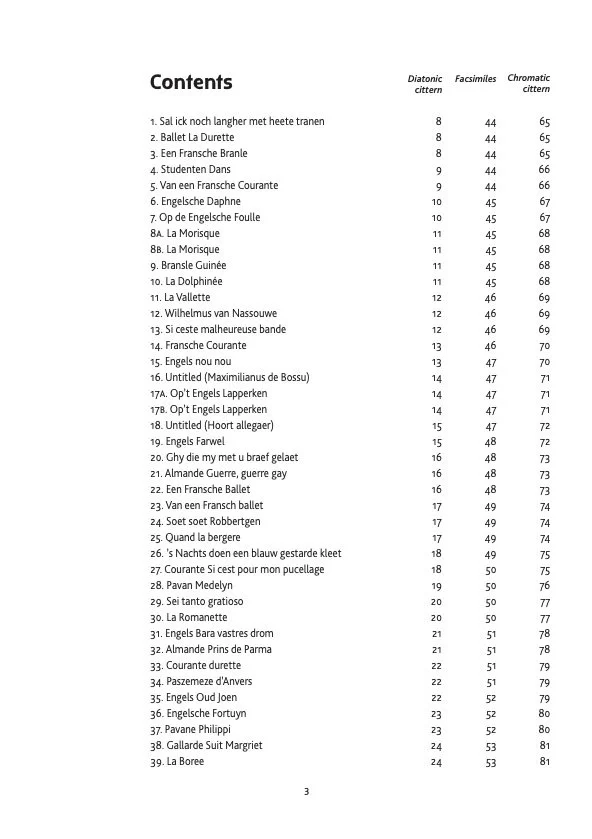 Image 2 of 4
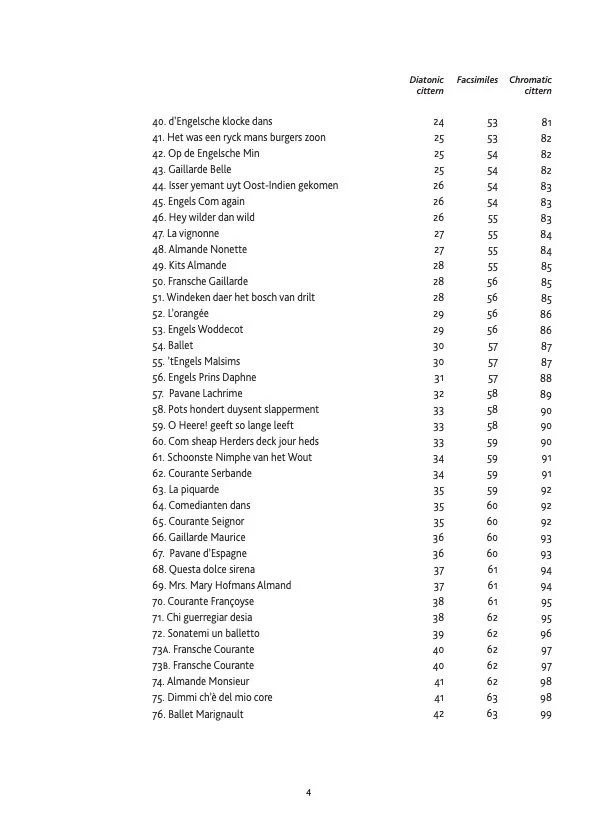 Image 3 of 4
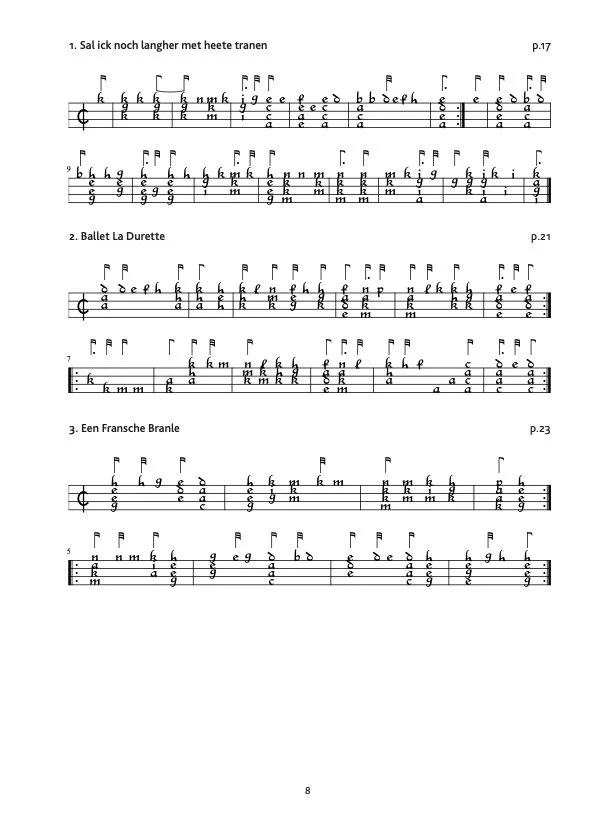 Image 4 of 4
Nederlandtsche Gedenck-clanck (Harlem, 1626) is a chronological account of the then ongoing conflict against Spanish rule, commonly known as the Dutch Revolt. The book’s compiler, Adriaen Valerius (c.1575–1625), a high-ranking city official of Veere, Zeeland, was also a poet. In addition to the written passages and a scattering of illustrations, he set many of the political and martial events to verse. These poems were set to popular dance or ballad tunes, most of which were well known in the Netherlands. The book’s 76 tunes demonstrate the cosmopolitan nature of Dutch society, for as well as Dutch, Valerius drew on English, French and Italian song and dance tunes. Most of the Italian melodies were taken from various editions of Gastoldi’s Balletti.
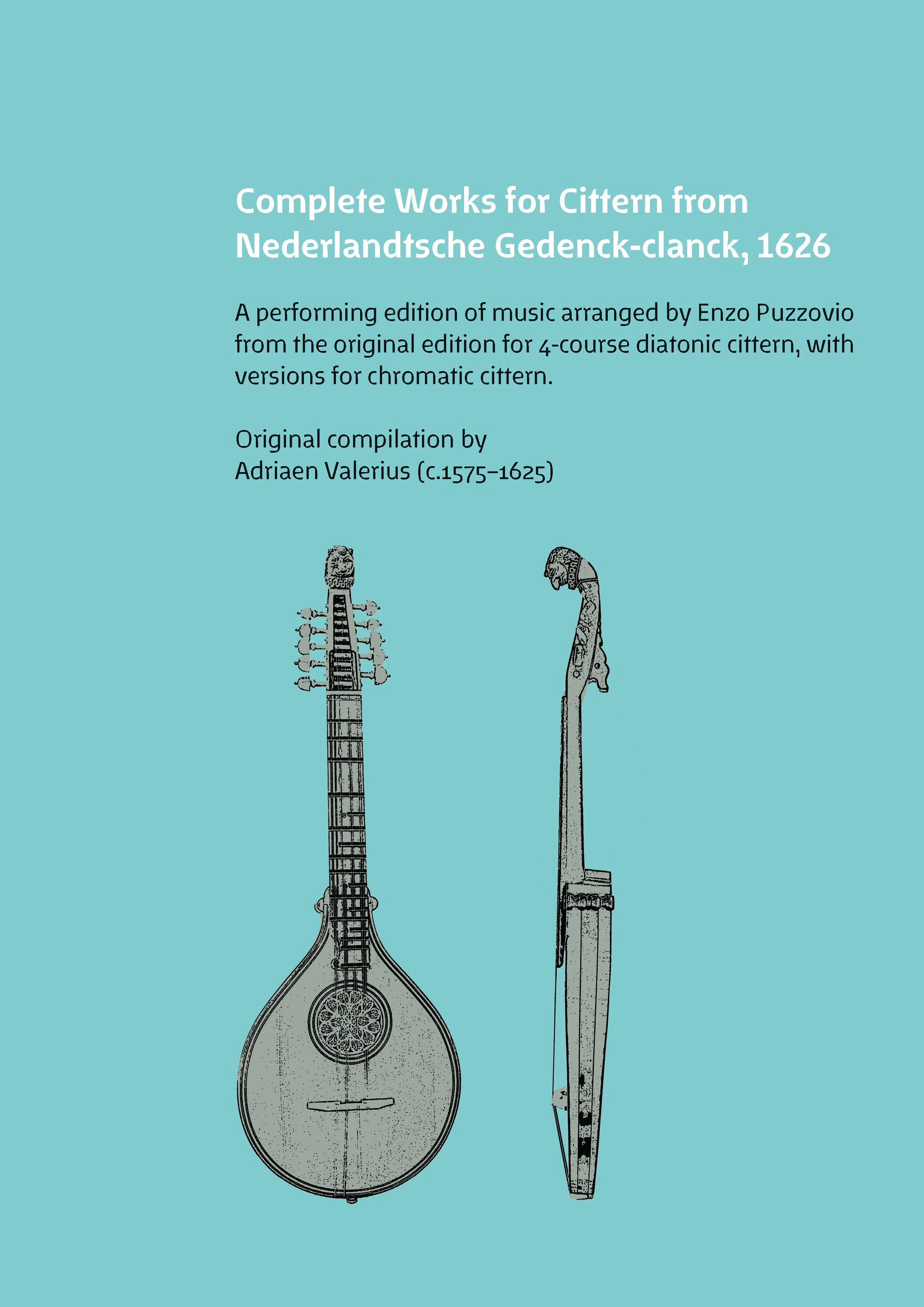
This edition is presented in three sections – the first being Enzo Puzzovio’s arrangements for diatonic cittern (aa’ gg’ d’d’ e’e’), the second being the original works for cross reference. The third section gives a version for chromatic cittern but with the 4th course retuned from b to a, a practice evident in the Willoughby Lute Book.
Nederlandtsche Gedenck-clanck (Harlem, 1626) is a chronological account of the then ongoing conflict against Spanish rule, commonly known as the Dutch Revolt. The book’s compiler, Adriaen Valerius (c.1575–1625), a high-ranking city official of Veere, Zeeland, was also a poet. In addition to the written passages and a scattering of illustrations, he set many of the political and martial events to verse. These poems were set to popular dance or ballad tunes, most of which were well known in the Netherlands. The book’s 76 tunes demonstrate the cosmopolitan nature of Dutch society, for as well as Dutch, Valerius drew on English, French and Italian song and dance tunes. Most of the Italian melodies were taken from various editions of Gastoldi’s Balletti.
This edition is presented in three sections – the first being Enzo Puzzovio’s arrangements for diatonic cittern (aa’ gg’ d’d’ e’e’), the second being the original works for cross reference. The third section gives a version for chromatic cittern but with the 4th course retuned from b to a, a practice evident in the Willoughby Lute Book.