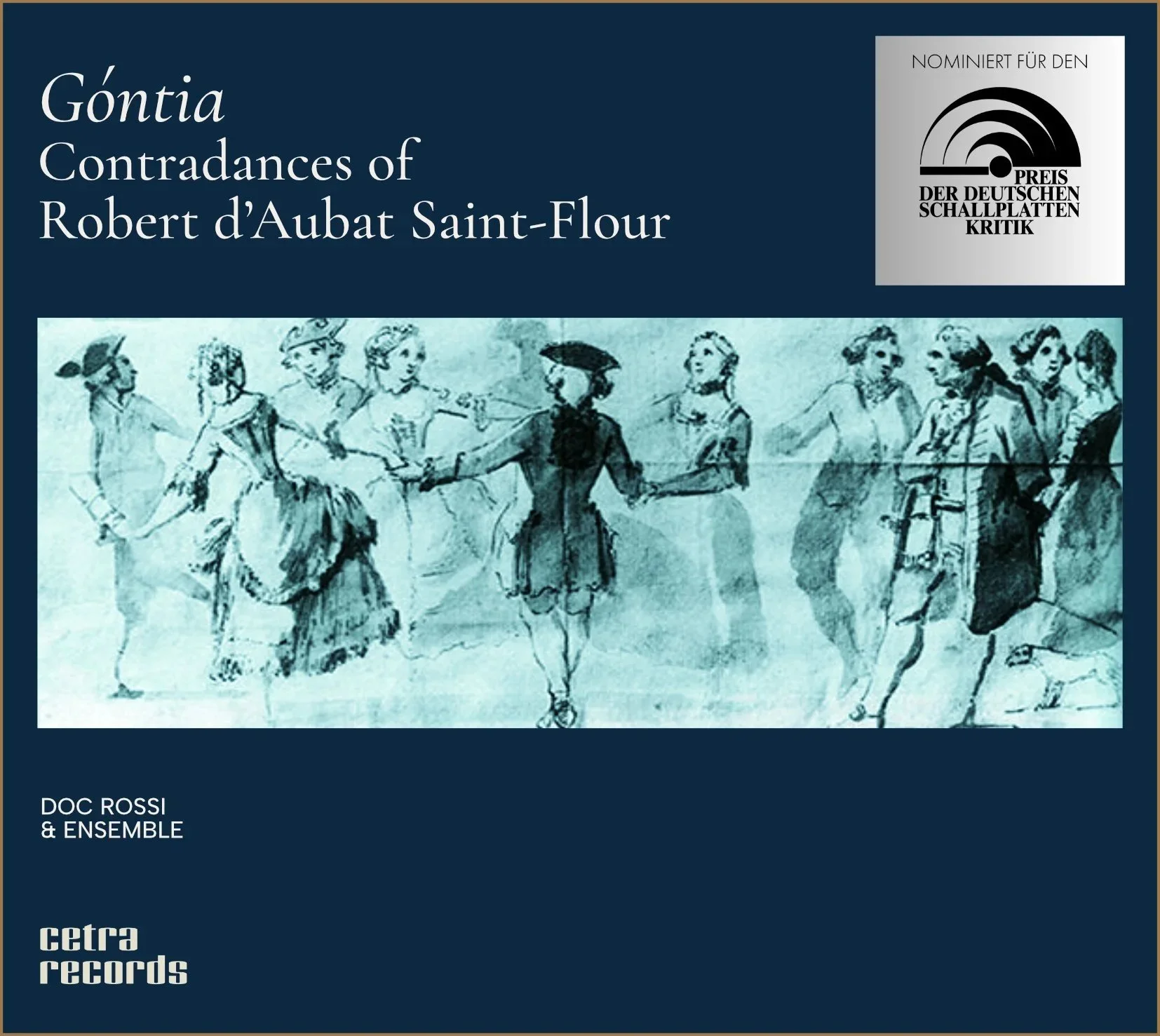
Góntia Contradances of Robert d'Aubat Saint-Flour

from €12.00

Based on the English “country dance”, the French contredanse found its way to the court of Louis XIV during the 1680s. By the beginning of the 18th century, it was popular throughout Europe at all levels of society.

In 1757 Robert Daubat (1714 Saint-Flour, France - 1782 Ghent, Belgium) - later known as Robert d’Aubat Saint-Flour - published the first edition of Cent contredanses en rond, in Ghent, where he had moved with his new bride, Michelle Le Quay, of Mons, in 1752. He composed the pantomime L'Amour d'Arlequin, which was performed at the Ghent Theatre in the summer of that year, and from that time on established himself in the music and cultural scenes of Ghent as a composer, violinist, and dancing master.

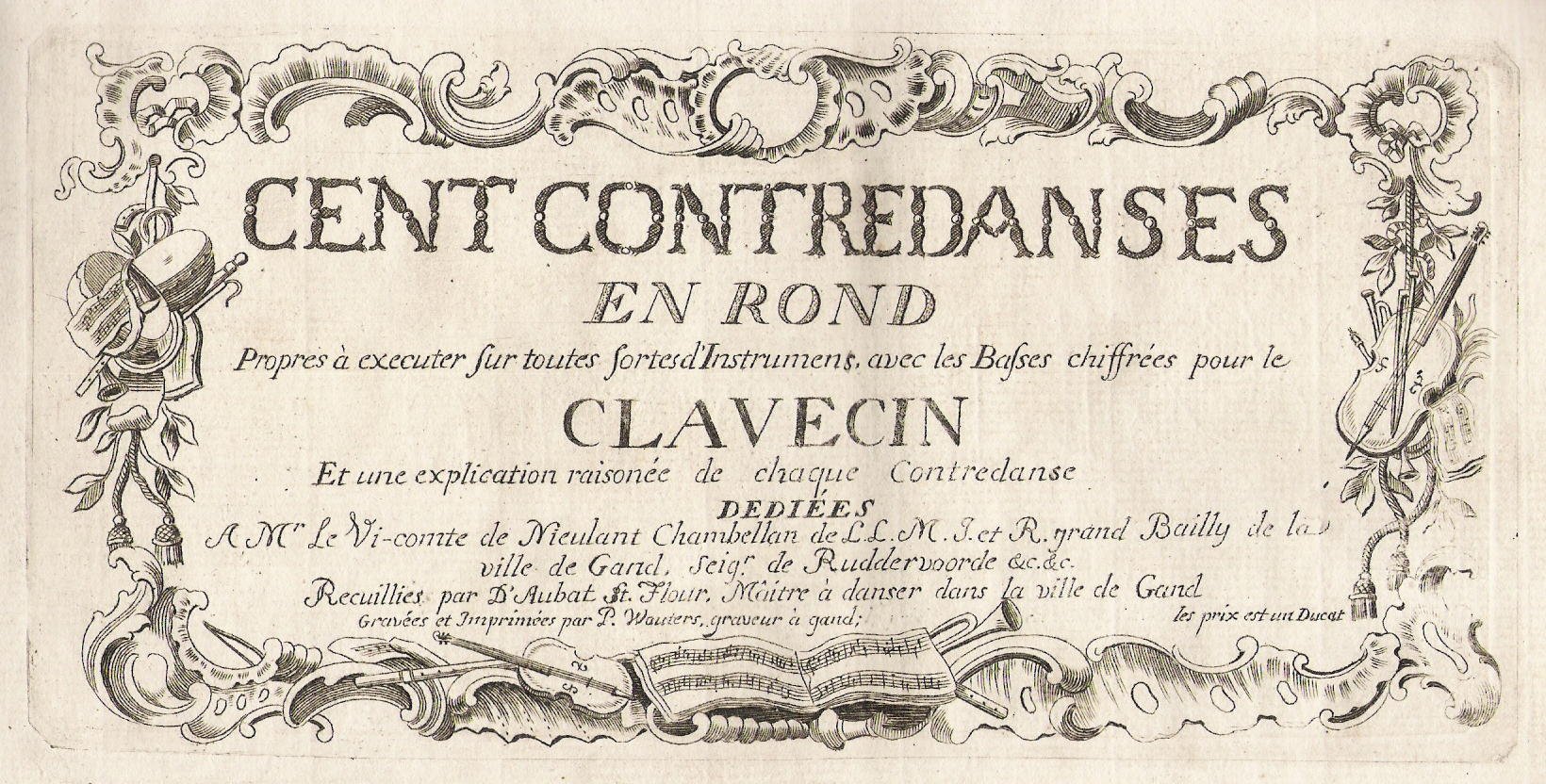
The full title of his collection of country dances is Cent contredanses en rond propre à exécuter sur toutes sorte d'instruments, avec les basses chiffrées pour le clavecin. It went through at least four editions, each adding a further six dances, culminating in the 1767 edition that featured 124 dances with music.

The arrangements performed on this album build on d’Aubat Saint-Flour’s simple, elegant settings to create a dance-oriented chamber music that unites the intricacies and gracefulness of the Galant style with the excitement and verve of country dance music.

Góntia is the moon and river goddess
from whom the city of Ghent, or Gand, takes its name.

Format:

Based on the English “country dance”, the French contredanse found its way to the court of Louis XIV during the 1680s. By the beginning of the 18th century, it was popular throughout Europe at all levels of society.

In 1757 Robert Daubat (1714 Saint-Flour, France - 1782 Ghent, Belgium) - later known as Robert d’Aubat Saint-Flour - published the first edition of Cent contredanses en rond, in Ghent, where he had moved with his new bride, Michelle Le Quay, of Mons, in 1752. He composed the pantomime L'Amour d'Arlequin, which was performed at the Ghent Theatre in the summer of that year, and from that time on established himself in the music and cultural scenes of Ghent as a composer, violinist, and dancing master.

The full title of his collection of country dances is Cent contredanses en rond propre à exécuter sur toutes sorte d'instruments, avec les basses chiffrées pour le clavecin. It went through at least four editions, each adding a further six dances, culminating in the 1767 edition that featured 124 dances with music.

The arrangements performed on this album build on d’Aubat Saint-Flour’s simple, elegant settings to create a dance-oriented chamber music that unites the intricacies and gracefulness of the Galant style with the excitement and verve of country dance music.

Góntia is the moon and river goddess
from whom the city of Ghent, or Gand, takes its name.

Track List

1. La Comme vous voudres & Le Lafaille

2. La Biby & Le Concert ou La Sabatine

3. La Chercheuse d'Oiseaux & La Bucheronne

4. La Legere & La Rossignol

5. La Champaitre La Prudente & La Paisanne Allemande

6. l'Ernestine La Babiole & l'Agreable

7. La Sabionniere Italienne & La Tambourina

8. La Cotterie des Dames

9. La Fidelite et La Merveilleuse

10. Les Victoires Autricheinnes du 18 & 20 Juin 1757

11. La Danoise La Croteste & La Danseuse

12. La Divertissante La Pucelle & Le Matelot Anglois

13. La Gaillarde ou l'Ordinaire des Dames & La Baroc

14. La Tendresse l'Evaporee & l'Ordre Theresien